
BIOCHEMISTRY
Cells
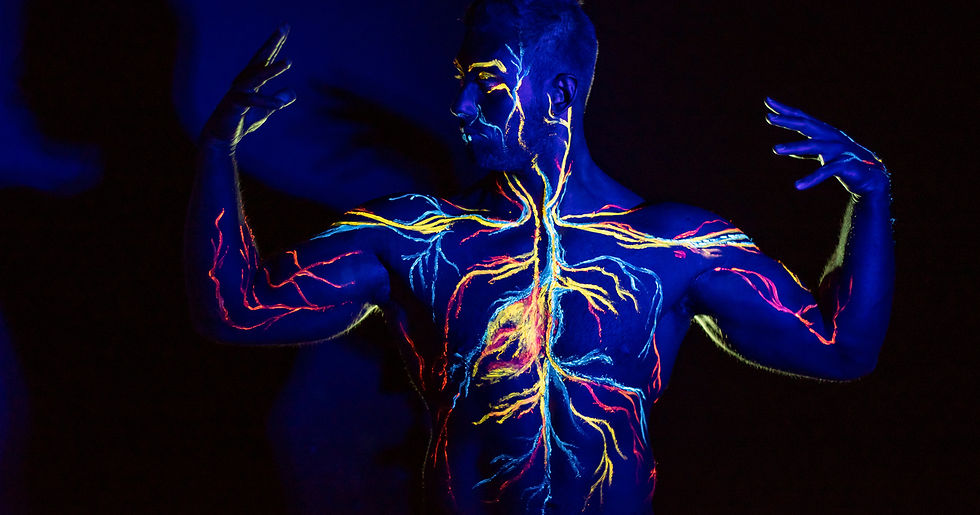
Without the presence of electricity the human body would have no movement or life. The human body is made up of a sub-structure called cells. At the cellular level cells function off of positive and negative electrical charges like an organic battery. Cells have a measurable electric charge of -40 to -80mv(millivolts). Herbal minerals contain an organic electrical substance called ions. The mineral responsible for the negative charge within the cell membrane is chloride. The mineral chloride is an anion which is a mineral that carries a negative ionic charge. The mineral which is responsible for the positive charge around the cell membrane is potassium. The mineral potassium carries positive ions known as cations. The positive and negative electrical charges within cells create an electric charge needed to produce movement, energy, structure and life in the human body. Cells transmit electrical signals via neurons and muscle cells. The minerals sodium and potassium are responsible for pumping ions into cells to inject fresh new electricity to maintain cellular equilibrium. When the balance of positive and negative electrical charges within a cell are not proper the cell depolarizes and causes what’s called programmable cell death. Programmable cell death is when a cell mutates or dies because it does not have electricity to stay alive because it is deficient in minerals containing positive and negative electrically charged ions. It is therefore vital to ingest the minerals that feed your cells the positive and negative electrical charges to maintain the proper function, structure, and energy of the human body.
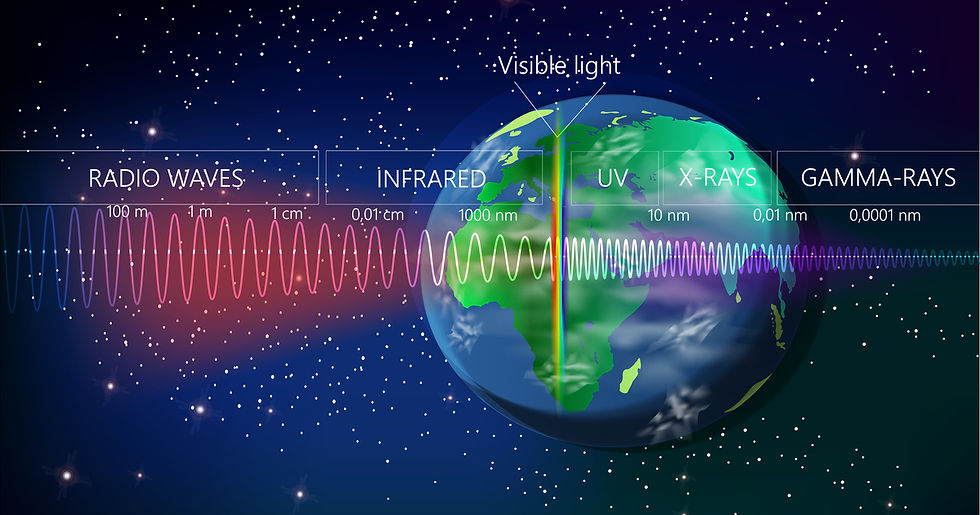
Each different color ION represents a different frequency within the visible electromagnetic light spectrum which ranges from 4x10 to the 14th power to 8x10 to the 14th power measured in Hz(hertz) and wavelengths 3.8x10 to the -7th power to 7.5x10 to the -7th power measured in m(meters) or 380nm to 750nm(nanometers) from red to violet. Each different frequency of light contains an electric charge which ranges from 2-3eV (electron volts) or 2000-3000mV(millivolts). Therefore, the various colors of ion contain electric charges ranging from 2-3eV to feed cells the vital organic electricity, POSITIVE+ & NEGATIVE- electrical charges that keep proper balance in the body. Simply put, Ions provide the organic electricity required by all cells and vital organs on-a-daily basis.
Biology-Ion Receptors
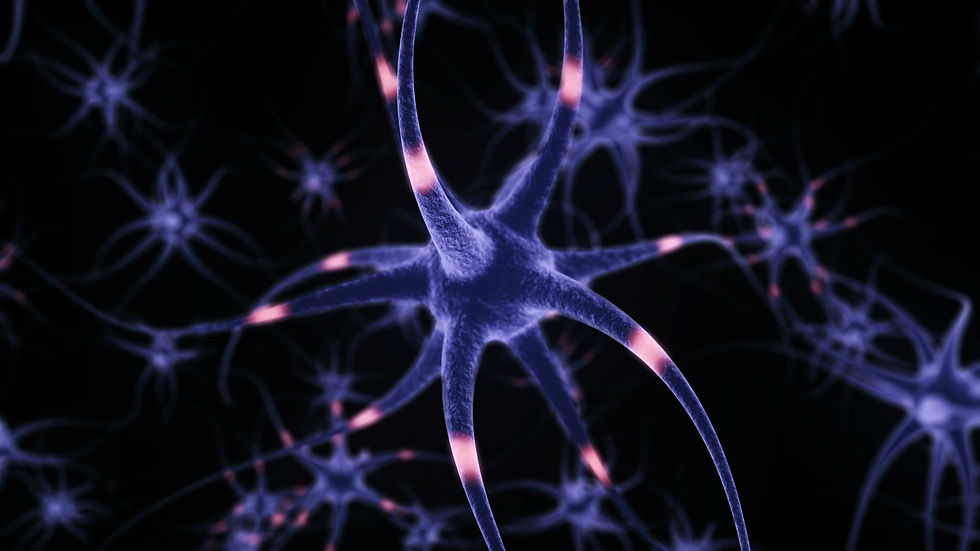
ION Receptors are the channels by which the vital organs receive the essential mineral ions for function, maintenance and structure health.
🧠 1. Voltage-Gated Ion Channels (VGICs)
These open in response to changes in membrane electrical potential.
a. Voltage-Gated Sodium (Na⁺) Channels
-
Ions involved: Sodium (Na⁺)
-
Main functions:
-
Initiate action potentials
-
Rapid depolarization of nerve and muscle cells
-
-
Major organs/tissues:
-
Nervous system (neurons)
-
Skeletal muscle
-
Cardiac muscle
-
b. Voltage-Gated Potassium (K⁺) Channels
-
Ions involved: Potassium (K⁺)
-
Main functions:
-
Repolarization of neurons & muscle cells
-
Maintain resting membrane potential
-
-
Organs/Tissues:
-
Nervous system
-
Heart (important in rhythm control)
-
Endocrine pancreas
-
c. Voltage-Gated Calcium (Ca²⁺) Channels
-
Ions involved: Calcium (Ca²⁺)
-
Main functions:
-
Trigger neurotransmitter release
-
Muscle contraction
-
Hormone secretion
-
-
Organs/Tissues:
-
Brain and nerves
-
Cardiac muscle
-
Smooth muscle (blood vessels, GI tract)
-
Endocrine glands
-
💧 2. Ligand-Gated Ion Channels (LGICs)
Open when a chemical messenger binds (neurotransmitter, hormone).
a. Nicotinic Acetylcholine Receptors (nAChRs)
-
Ions: Na⁺ and K⁺
-
Activated by: Acetylcholine
-
Organs/Tissues:
-
Neuromuscular junction (skeletal muscle)
-
Peripheral nervous system
-
Brain
-
b. GABA_A Receptors
-
Ions: Chloride (Cl⁻)
-
Activated by: GABA
-
Organs/Tissues:
-
Central nervous system (major inhibitory channel)
-
c. NMDA / AMPA Glutamate Receptors
-
Ions: Ca²⁺, Na⁺, K⁺
-
Activated by: Glutamate
-
Organs/Tissues:
-
Brain (learning, memory, excitatory signaling)
-
⚙️ 3. Mechanically-Gated Ion Channels
Open in response to physical forces (pressure, stretch, vibration).
Examples
-
Piezo channels
-
Ions: Ca²⁺
-
Organs: skin, blood vessels, bladder
-
-
Hair cell mechanotransducers
-
Ions: K⁺, Ca²⁺
-
Organs: inner ear (hearing & balance)
-
💡 4. Calcium-Activated Potassium Channels (KCa)
-
Ions transported: K⁺
-
Activated by: Increase in intracellular Ca²⁺
-
Organs/Tissues:
-
Brain
-
Vascular smooth muscle (help regulate blood pressure)
-
Endocrine cells
-
🍃 5. Inward Rectifier Potassium Channels (Kir)
-
Ions: K⁺
-
Function: Maintain stable resting membrane potential
-
Organs:
-
Heart (important in pacemaker stability)
-
Kidneys
-
Brain
-
⚡ 6. Chloride Channels
a. CFTR (Cystic Fibrosis Transmembrane Conductance Regulator)
-
Ions: Cl⁻ (also regulates bicarbonate HCO₃⁻)
-
Organs:
-
Lungs
-
Pancreas
-
Intestines
-
Sweat glands
-
b. GABA_A (as above)
-
Ions: Cl⁻
-
Organs: CNS
🧬 7. Non-Selective Cation Channels
Let multiple ions pass (Na⁺, K⁺, Ca²⁺).
Examples
-
TRP channels (Transient Receptor Potential)
-
Respond to temperature, pain, stretch, chemicals
-
Organs: Skin, brain, kidneys, vasculature
-
-
HCN channels (Pacemaker channels)
-
Ions: Na⁺ and K⁺
-
Organs:
-
Heart SA node
-
Brain
-
-
🪨 8. Ion Pumps and Exchangers (not channels, but closely related)
a. Na⁺/K⁺ ATPase
-
Moves 3 Na⁺ out + 2 K⁺ in per cycle
-
Organs: all cells, especially muscle and nerve
b. Ca²⁺ ATPase
-
Pumps Ca²⁺ out of cytoplasm
-
Organs: muscle cells (sarco/endoplasmic reticulum)
Major Electrolytes
These are required in relatively large amounts and are crucial for fluid balance, nerve signaling, and muscle function.
Ion Name SymbolCommon Ion Form
Sodium Na Na⁺
Potassium K K⁺
Chloride Cl Cl⁻
Calcium Ca Ca²⁺
Magnesium Mg Mg²⁺
Bicarbonate HCO₃ HCO₃⁻
Phosphate P PO₄³⁻ (various forms)
Sulfate S SO₄²⁻
Essential Trace Ions
Needed in small amounts but critical for enzyme function, oxygen transport, hormone production, etc.
Ion Name SymbolCommon Ion Form
Iron Fe Fe²⁺, Fe³⁺
Zinc Zn Zn²⁺
Copper Cu Cu⁺, Cu²⁺
Iodide / Iodine I I⁻
Fluoride F F⁻
Manganese Mn Mn²⁺
Molybdenum Mo MoO₄²⁻ (molybdate)
Selenium Se SeO₄²⁻, SeO₃²⁻ (selenate/selenite)
Chromium Cr Cr³⁺
Cobalt Co Co²⁺ (part of vitamin B₁₂)
Io
Blood Cells in Darkfield Microscope

IONZ cell food

FLAME TEST SHOWING ION COLORS OF MINERALS

ELECTROMAGNETIC SPECTRUM


